

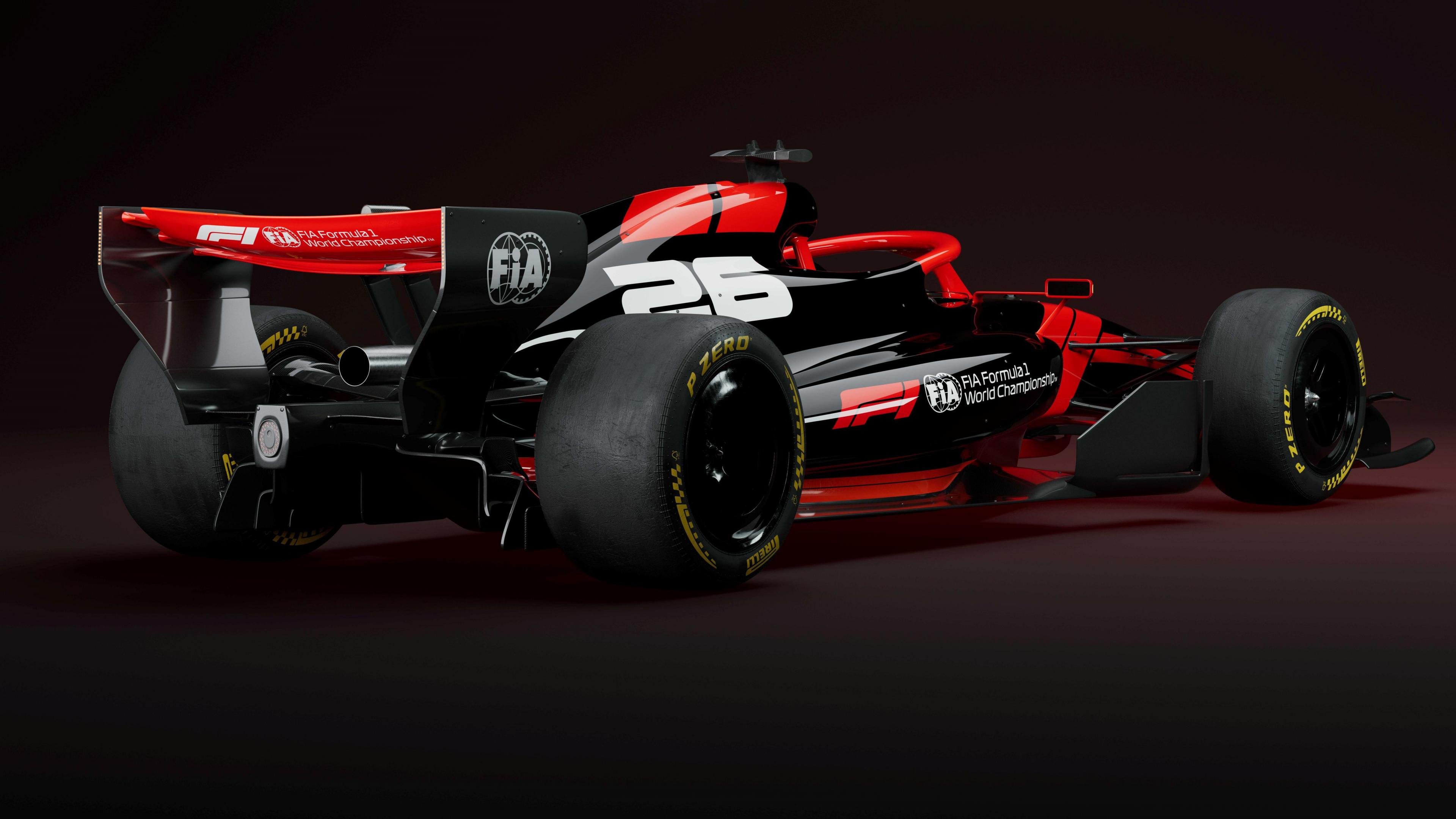
The 2026 cars are expected to be lighter, more agile and sustainable relative to present-day cars.
F1 has introduced the official vocabulary that will be used to describe the intricate details of its upcoming 2026 rulebook.
The sport is introducing what is arguably the largest rules overhaul in its long history starting in 2026, featuring new chassis and engine rules and the mandatory use of 100% sustainable fuels.
The revised engines, which retain the 1.6-litre V6 turbo hybrid, boast a substantially higher battery power, driving major innovations in the cars' aerodynamics.
Over a race distance, competitors will strategically manage electrical energy – potentially on hot laps – to extract the optimal result.
Wide-ranging research were carried out with a mix of viewers, including new, casual and core fans, to understand which terms would make things clearer of the central aspects of the upcoming rules.
The stated goal was to make a series of complex features of the sport as accessible as possible for the global fanbase.
Consequently, previous placeholder terms for some systems – such as "alphabetical mode names" for the moveable wings – have been discarded in favour of intuitive labels that clearly indicate the actual function of the system.
What's the New Technology?
According to rule-makers that racers will have greater control to determine tactics regarding battery management, regeneration, and conservation.
The new regulations introduce a range of settings that will be visually displayed on TV overlays to improve the fans' insight of the race battle.
- Overtake Mode: This replaces the present overtaking aid. It provides a surge of additional ERS power accessible when a car is within one second the vehicle in front to facilitate an overtaking maneuver.
- Boost Mode: This is a manual battery discharge from the hybrid system that can be utilized during overtaking or defending. It delivers the pilot peak output at the click of a switch.
Both of these key functions will have to be deployed strategically, as the available electrical charge is restricted.
- Active Aerodynamics: Both the nose and rear wings adjust their angles – flattening on the long straight sections for reduced drag and top speed, and angling down in the corners for optimal cornering performance.
- Battery Recharge: The system can recharge the energy store with power recovered from braking, or during throttle lift at the conclusion of a straight or in sections where only limited engine output is applied.
What's Changing on the Cars?
The vehicles for the new era will be smaller and lighter relative to current models, with a car length cut by 200mm to 3,400mm, car width narrowed by 100mm – down to 1,900mm – and the car weight lowered by 30kg.
Total aerodynamic grip is expected to drop by approximately a significant margin, although squads will inevitably claw this back as they optimize their packages.
Drag has been slashed by 40%. The vehicles will feature adjustable aero systems – both wings will open on the straight sections to reduce drag and enhance velocity and click back into place for optimal grip in corners.
Tyres will retain 18-inch wheel rims, but the actual tyres will be reduced in width, by a quarter-centimetre on the front and 30mm at the rear.
Power Unit Revolution
The 2026 engines will have an near-equal balance in energy output by the internal combustion engine and the electrical system, increasing from about 20% battery contribution in the current formula.
The energy recovery system is made less complex through the elimination of the complex turbo energy recovery device, the intricate and expensive device that recovered energy from the turbo.
All vehicles will be required to run on 100% sustainable fuel, manufactured from plant-based materials or synthetic production methods.


